Washer & Dryer Buying Guide
Front-load vs. top-load, gas vs. electric vs. heat-pump, and how to size laundry machines to your actual household — honest advice from Summit's floor.
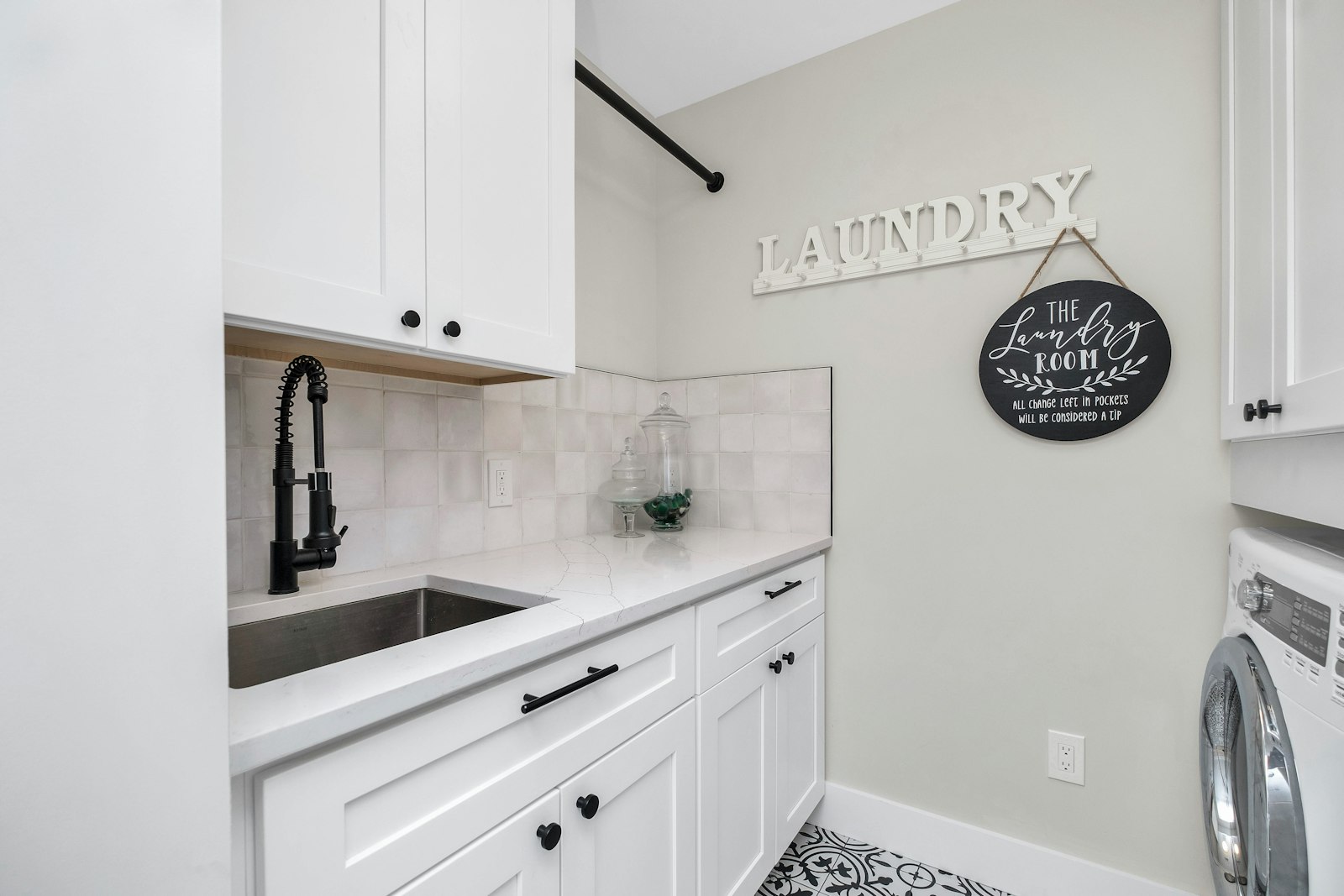
The two questions that decide everything
Before brands, before features, answer these: where do the machines live, and how does your household actually do laundry — one giant weekend load, or a load every night? Those two answers pick your configuration; everything after is refinement.
Measure the space first: width, depth, height, and the door or closet opening in front of it. Note the dryer vent location, the outlet type (a 240V outlet looks like nothing else in your house), and whether there's a gas stub. Bring photos. Our counter can spec a laundry pair from three photos and a tape measure reading, and we do it daily.
Front-load vs. top-load, without the religion
Front-loaders clean better with less water, spin faster (which cuts drying time and your energy bill), and stack. They cost more up front, and they ask one thing of you: leave the door cracked between loads so the gasket dries. Top-loaders cost less, load without bending, finish faster on standard cycles, and their simplicity is why they dominate our rental-property sales. Neither is wrong. A household that air-dries performance gear and skis every weekend gets more from a 1,300-RPM front-loader; a household that wants a dependable machine with zero habits attached should buy the top-loader without guilt.
Capacity, in real terms
Forget cubic feet for a second: a 4.0 washes a queen comforter, a 4.8 washes a king, and a 5.8 washes the king plus the dog bed it was protecting. Compact 2.5 machines handle a couple's weekly laundry in two loads. Match the dryer at roughly 1.5x the washer's capacity — clothes need tumbling room to dry — which is why pairs are sized the way they are. Buying the dryer too small is the most common self-inflicted laundry wound we see.
Gas, electric, or heat-pump drying
If you have a gas stub, a gas dryer costs about $100 more up front and less every month thereafter. Electric (240V) is the default and dries identically. Heat-pump ventless dryers are the quiet revolution: no vent to cut, a standard 120V plug, and roughly 40% of the energy use — the answer for condos, ADUs, and any closet on an exterior brick wall. They dry a little slower and gentler; your clothes will not complain.
Features worth paying for
Moisture sensing (stops when clothes are dry — saves energy and your elastic), high spin speeds on the washer, a sanitize cycle with a real internal heater, and stacking kits installed by people who've done it before. Steam functions are genuinely useful for de-wrinkling; Wi-Fi cycle notifications are genuinely useful for forgetting fewer loads; everything else on the spec sheet is mostly brochure.
What should you spend?
An honest top-load pair runs $980–$1,350. A quality front-load pair runs $1,900–$2,500 — watch for pair rebates, which routinely close half that gap. Compacts run $1,000–$1,300 per piece. And check our open-box page before you buy anything: laundry is our most common scratch-and-dent category, and a dent on the side panel disappears into a closet forever.