Refrigerator Buying Guide
How to choose a refrigerator that fits your kitchen, your doorway, and the way your household actually eats — from the Summit sales floor.
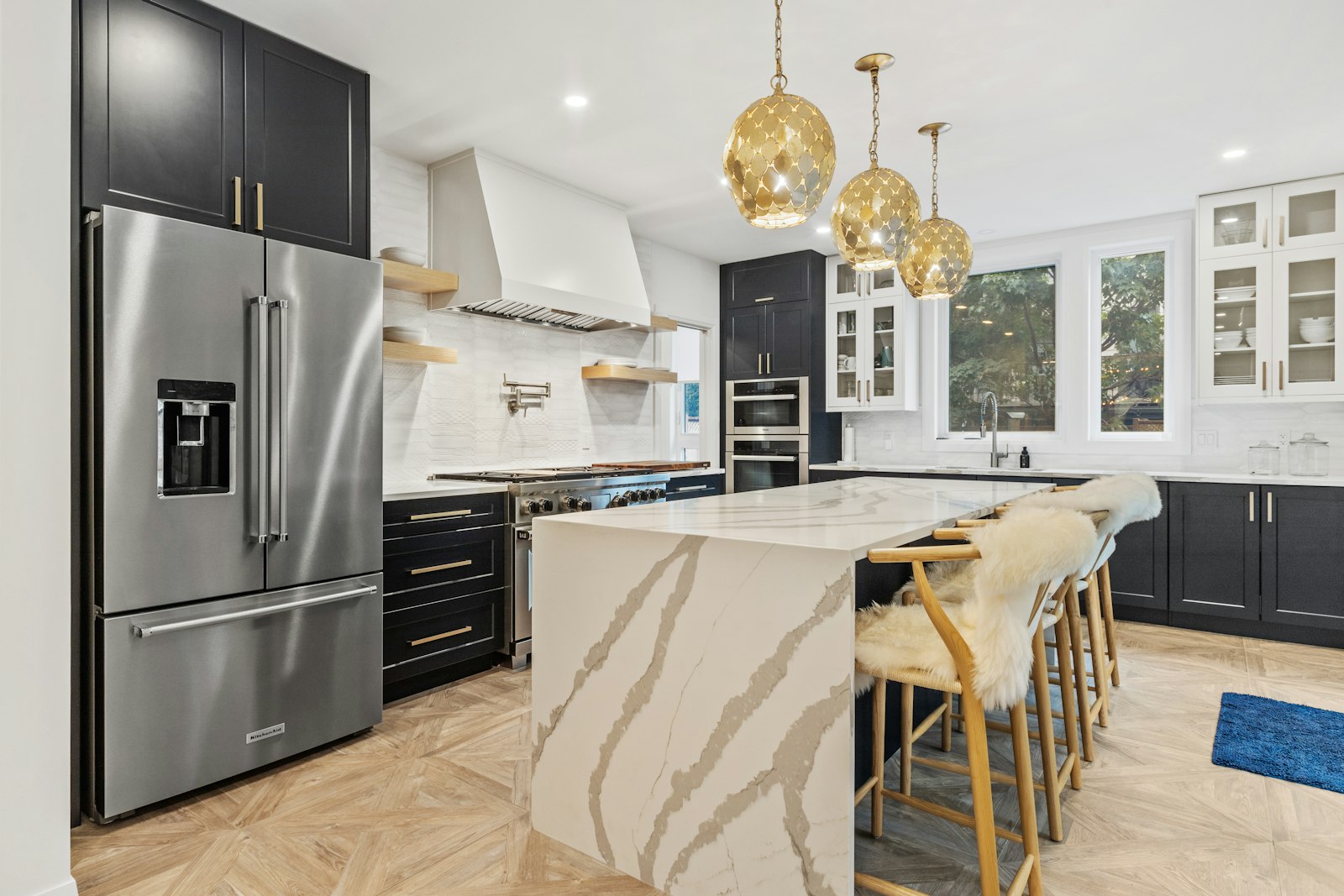
Start with the hole, not the fridge
Every refrigerator regret we've ever refunded started the same way: someone fell in love with a model before measuring the space. So do this first — measure the width, height, and depth of your cutout, then the narrowest doorway, hallway, or stair turn between the street and the kitchen. Write down all four numbers. A 36-inch refrigerator does not fit through a 34-inch door, and older Boulder houses are full of 30-inch doors. (Our measuring guide walks through the whole routine.)
While you're there, note what's around the cutout. A wall on the hinge side limits how far the door swings, which decides whether the crisper drawers can pull out at all. This is the detail showrooms forget and delivery crews never do.
Pick a configuration by how you eat
- French door — fresh food at eye level, freezer below in drawers. The best all-rounder for families who cook. Wide shelves swallow sheet-pan leftovers and party platters.
- Side-by-side — narrow doors that work in tight galley kitchens where a full-width door can't swing. Tall, narrow freezer means great organization but no room for a frozen pizza box laid flat. Be honest about your pizza habits.
- Bottom-freezer — the underrated pick: fresh food up top like a French door, one simple door, usually hundreds less. Often the only 33-inch-friendly choice for older kitchens.
- Top-freezer — the value king. Fewest parts, fewest repairs; it's what our own service data says to buy for rentals and garages.
- Columns — separate refrigerator and freezer units that build into cabinetry for a flush, panel-ready look. The premium path — plan on a dedicated circuit and a cabinet conversation before you order.
Counter-depth, honestly
"Counter-depth" means roughly 24–25 inches of box so the front sits flush with your counters. It looks fantastic and costs you roughly 20% of the capacity of a standard-depth box at a higher price. Worth it in open kitchens where the fridge sticks out into a walkway; skip it if the fridge lives in an alcove where nobody sees its sides.
Features that earn their price — and ones that don't
Worth paying for: dual evaporators (produce stays crisp weeks longer in dry Colorado air), a full-width deli drawer, door-in-door if your kids graze, and a good water filter you can buy locally. Think twice about: door screens, cameras, and anything that needs an app — they're the first things our service department gets called about and the last things anyone misses.
What should you spend?
Solid top-freezers run $599–$899. Family French doors live between $1,400 and $2,700. Counter-depth premium models run $3,000–$4,000, and built-in columns start around $4,500 and climb. Every one of those tiers keeps food cold; you're paying for space, quiet, finish, and fit.
Still torn between two models? Bring your four measurements to either showroom — we'll tell you which one fits, and we'll tell you if the cheaper one is the better buy. It often is.